The Future of Surgery? Humanoid Robot Performs Pig Gallbladder Removal Under Surgeon Control

UI/UX Architect & Spatial Web3D Developer · AI Neural Dispatch
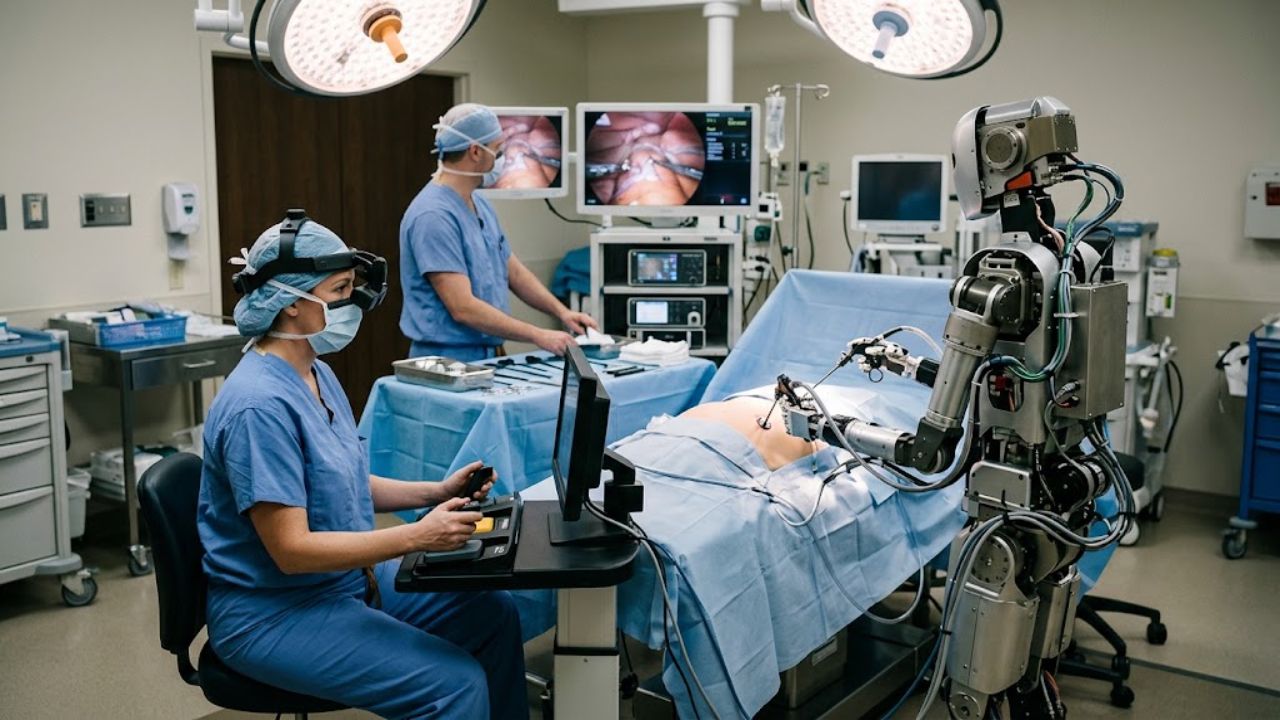
The Future of Surgery? Humanoid Robot Performs Pig Gallbladder Removal Under Surgeon Control
Imagine a future where surgeons don't always stand over the operating table, but rather guide precision instruments from a console, perhaps even remotely. That future took a significant step closer recently, as a 60-pound humanoid robot successfully performed a gallbladder removal on a live pig, with human surgeons expertly controlling its every movement.
This groundbreaking procedure took place at UC San Diego, where two teleoperated humanoid robots were utilized for the delicate operation. The key phrase here is 'teleoperated' — while the robots executed the physical tasks, every single movement was directly driven by skilled surgeons. This is not yet a fully autonomous system, but a sophisticated tool extending the surgeon's hands with unparalleled precision.
Precision and Potential: What This Means for Medicine
The ability of humanoid robots to perform complex surgical tasks, even under direct human guidance, opens up a world of possibilities for the medical field:
- Enhanced Precision: Robots can execute movements with a steadiness and accuracy that even the most experienced human hand might struggle to maintain over long periods, reducing fatigue and potential for error.
- Minimally Invasive Procedures: The dexterity of these robots could lead to even less invasive surgeries, resulting in faster patient recovery times and reduced scarring.
- Remote Surgery: In the long term, teleoperated systems could enable surgeons to perform operations on patients in remote or underserved areas, bridging geographical gaps in healthcare access.
- Training and Simulation: These platforms could also serve as advanced training tools for aspiring surgeons, allowing them to practice complex procedures in a controlled, realistic environment.
The Road Ahead: Autonomy Still Years Off
While the achievement is monumental, it's crucial to understand that full autonomy in surgical robots is still years away. The current systems are advanced extensions of human expertise, not replacements. Ethical considerations, regulatory hurdles, and the need for robust AI development mean that a truly self-operating surgical robot remains a distant goal.
However, this successful pig gallbladder removal marks a significant milestone. It demonstrates the immense potential of robotics in medicine, paving the way for a future where technology and human skill combine to elevate healthcare to unprecedented levels of precision and accessibility. It's an exciting glimpse into the operating rooms of tomorrow.
Drop a Live Cyber Reaction
Shouvik Das
Visionary UI/UX Architect, Spatial Web3D Developer, and creator of Anime Nation India. Dedicated to pushing the boundaries of web engineering, digital storytelling, and international travel.
Related Discoveries

Strategic Alliances: Anthropic's Revenue Lean on Cloud Giants Google, Amazon, and Microsoft
AI startup Anthropic generates nearly half its revenue by offering access to its AI models through the cloud platforms of rivals Amazon, Google, and Microsoft, highlighting a complex web of competition and collaboration in the AI market.

Early Cracks Appear: Apple's Foldable iPhone Duo Faces Screen Durability Concerns
Early adopters of Apple's new foldable iPhone Duo are reporting disconcerting screen cracking issues along the center crease, raising questions about the durability of the innovative design.

Unlocking India's AI Potential: Talent, Compute, and R&D are Crucial, Says New Report
A recent report emphasizes the critical need for India to bolster its talent pool, computing infrastructure, and R&D capabilities to harness AI for economic and social growth.