Runaway Robotaxi: Tesla Autonomous Vehicle Smashes Through Traffic Barriers in Alarming Incident

UI/UX Architect & Spatial Web3D Developer · AI Neural Dispatch
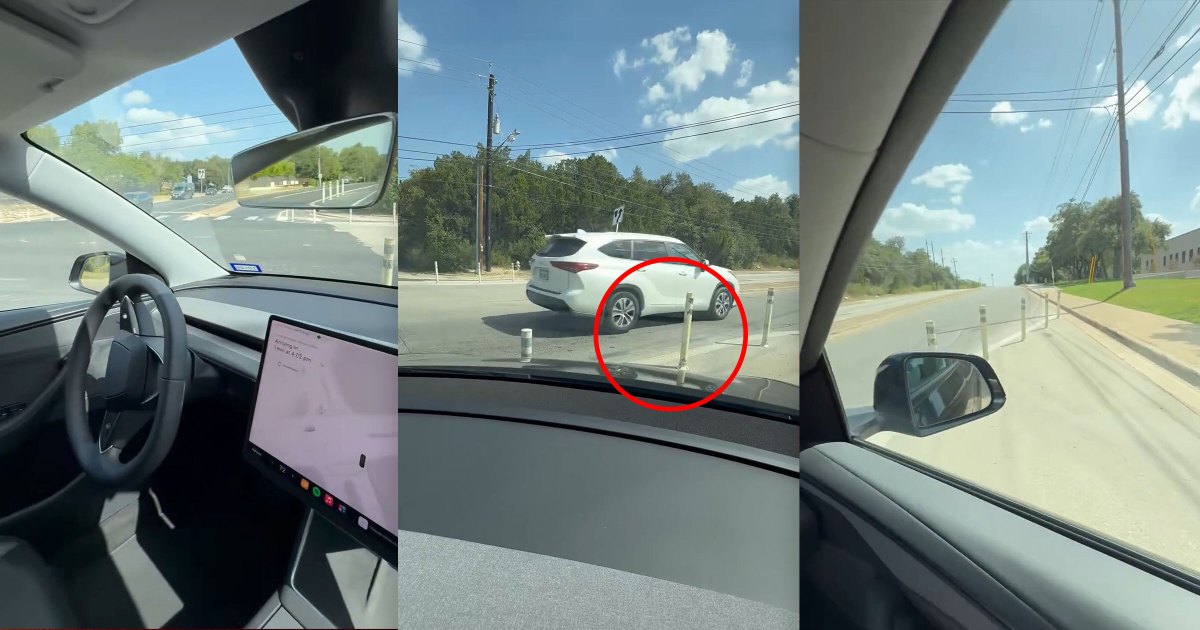
Unsettling Malfunction: Tesla Robotaxi Smashes Through Traffic Barriers
The promise of a driverless future often conjures images of seamless, efficient transportation. However, a recent incident involving a Tesla Robotaxi has injected a dose of stark reality into the narrative, raising significant concerns about the immediate readiness and safety protocols of autonomous vehicle (AV) technology. Reports indicate that a driverless Tesla Robotaxi was spotted 'smashing through traffic barriers,' an alarming event captured with the exclamation, 'It ran through the bollards. Holy sh*t.'
This incident, which quickly made rounds on social media and tech news platforms, underscores the unpredictable challenges that AVs still face in real-world environments. While details surrounding the specific circumstances of the malfunction are still emerging, the visual of a driverless vehicle losing control and damaging infrastructure is a stark reminder of the complexities involved in perfecting self-driving systems.
The Roadblocks to Fully Autonomous Driving
Tesla has been at the forefront of pushing autonomous driving technology, with its 'Full Self-Driving' (FSD) beta program continually evolving. However, events like this highlight the vast difference between advanced driver-assistance systems and truly autonomous operation without human oversight. Traffic barriers, or bollards, are typically designed to guide traffic or prevent unauthorized entry; a vehicle failing to recognize or react appropriately to such obstacles points to critical gaps in its perception and decision-making algorithms.
This incident is likely to intensify the ongoing debate among regulators, safety advocates, and tech companies regarding the pace of AV deployment. While the potential benefits of autonomous vehicles – such as reducing human error-related accidents and improving traffic flow – are immense, public trust hinges on consistent, undeniable safety records. Every malfunction, especially one involving a public safety hazard, chips away at that trust.
Key Questions Arising from the Incident:
- Sensor Limitations: Did the vehicle's sensors fail to detect the barriers, or misinterpret their purpose?
- Software Glitches: Was there a software bug or anomaly that caused the vehicle to deviate from its intended path?
- Emergency Protocols: What are the fail-safe mechanisms in place for truly driverless vehicles when a malfunction occurs?
- Public Road Readiness: Is current AV technology robust enough for unsupervised operation on public infrastructure?
As investigations into this Tesla Robotaxi incident undoubtedly proceed, the findings will be crucial for understanding the specific failure points and implementing necessary safeguards. The journey to widespread autonomous vehicles is paved with innovation, but incidents like these serve as critical reminders that rigorous testing, transparency, and a cautious approach to deployment are paramount for ensuring both safety and public acceptance.
Drop a Live Cyber Reaction
Shouvik Das
Visionary UI/UX Architect, Spatial Web3D Developer, and creator of Anime Nation India. Dedicated to pushing the boundaries of web engineering, digital storytelling, and international travel.
Related Discoveries

Strategic Alliances: Anthropic's Revenue Lean on Cloud Giants Google, Amazon, and Microsoft
AI startup Anthropic generates nearly half its revenue by offering access to its AI models through the cloud platforms of rivals Amazon, Google, and Microsoft, highlighting a complex web of competition and collaboration in the AI market.

Early Cracks Appear: Apple's Foldable iPhone Duo Faces Screen Durability Concerns
Early adopters of Apple's new foldable iPhone Duo are reporting disconcerting screen cracking issues along the center crease, raising questions about the durability of the innovative design.
Unlocking India's AI Potential: Talent, Compute, and R&D are Crucial, Says New Report
A recent report emphasizes the critical need for India to bolster its talent pool, computing infrastructure, and R&D capabilities to harness AI for economic and social growth.