Historic First: NASA's MOXIE Experiment Successfully Produces Oxygen on Mars

UI/UX Architect & Spatial Web3D Developer · AI Neural Dispatch
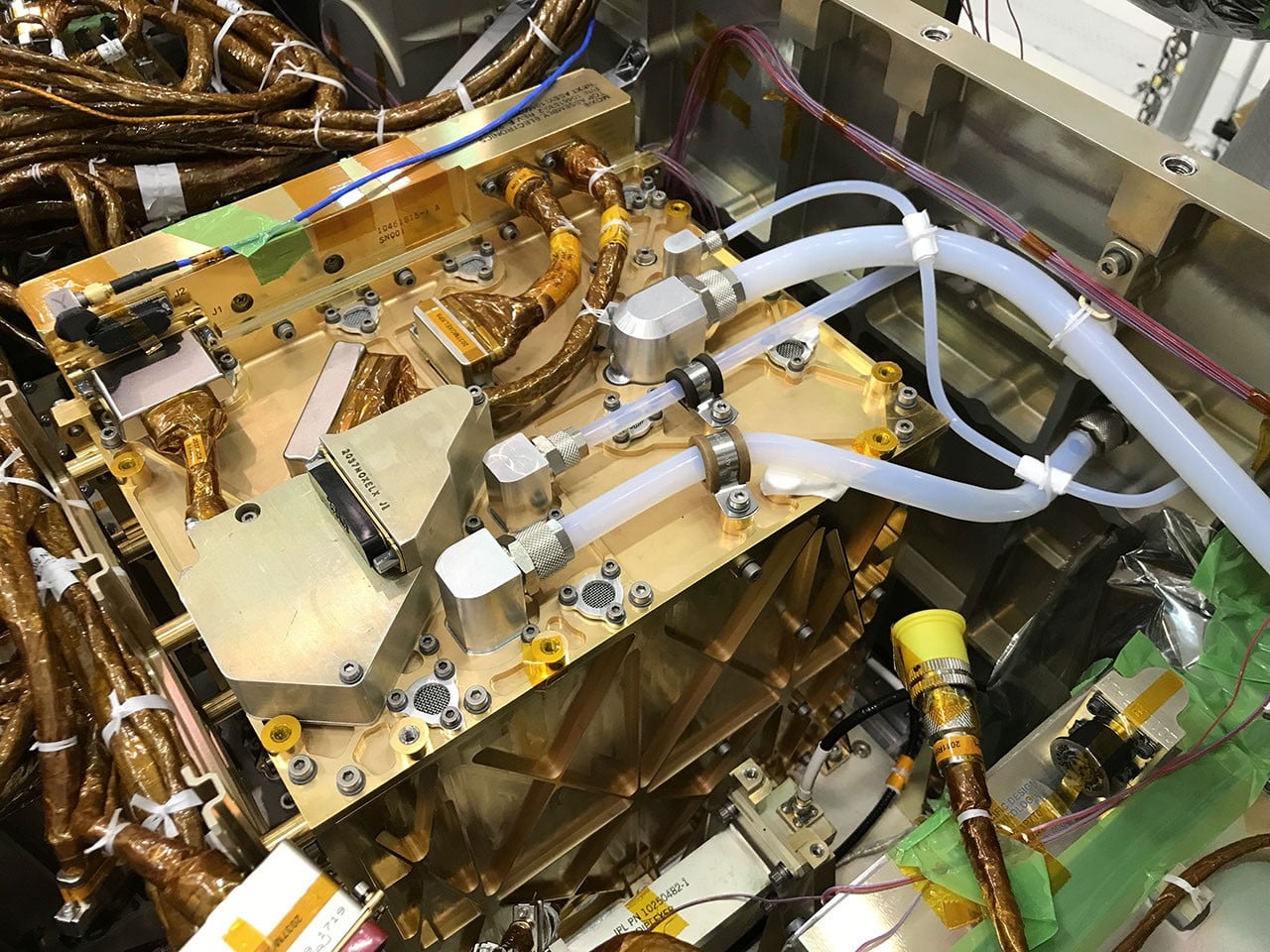
Breathing Life into Mars: MOXIE's Pioneering Oxygen Production
In a monumental stride for space exploration, NASA's Perseverance rover achieved a historic first in 2021 with its Mars Oxygen In-Situ Resource Utilization Experiment (MOXIE). This compact, microwave-oven-sized instrument successfully extracted oxygen from the Martian atmosphere, which is predominantly carbon dioxide. This groundbreaking demonstration marks the first time a usable resource has been produced directly from the environment of another planet, fundamentally changing the prospects for future human missions to the Red Planet.
How MOXIE Works: Turning Martian Air into a Usable Resource
MOXIE operates by using solid oxide electrolysis to separate oxygen atoms from carbon dioxide molecules (CO2), which makes up about 96% of Mars's atmosphere. It heats the Martian air to approximately 800 degrees Celsius (1,470 degrees Fahrenheit) and then applies an electrical current, causing the CO2 molecules to split. This process yields oxygen (O2) and carbon monoxide (CO).
While MOXIE's initial hour on Mars produced a modest 5.4 grams of oxygen – roughly enough for an astronaut to breathe for about 10 minutes – its significance far outweighs the quantity. It proved that in-situ resource utilization (ISRU) is not just a theoretical concept but a tangible reality, opening doors to more sustainable and independent long-duration missions.
The Profound Implications for Human Mars Missions
The ability to produce oxygen on Mars has at least two critical applications for human exploration:
- Astronaut Life Support: Future human explorers will need oxygen to breathe. Transporting all necessary oxygen from Earth is impractical and extremely costly due to the sheer volume and weight required for extended stays. Local production significantly reduces mission mass and increases self-sufficiency.
- Rocket Propellant: Perhaps even more crucial is oxygen's role as an oxidizer for rocket fuel. For astronauts to return to Earth from Mars, they will need a significant amount of propellant. Producing this oxidizer on Mars itself means future return missions could be launched from the Martian surface, rather than relying on an impossibly large amount of fuel brought from Earth. A mission of four astronauts would need about 25 metric tons of oxygen for their return journey.
Beyond MOXIE: The Future of Martian ISRU
MOXIE was designed as a proof-of-concept, operating intermittently and in varying Martian conditions to demonstrate its capabilities. Its success has paved the way for larger, more robust oxygen generators that could be deployed ahead of human crews. This technology, alongside other ISRU concepts like extracting water ice, is fundamental to NASA's 'Moon to Mars' vision, which aims to establish a sustained human presence on the Moon as a stepping stone to deep-space exploration.
The successful operation of MOXIE is more than just a scientific achievement; it's a paradigm shift, transforming Mars from a destination solely reliant on Earth's provisions into a potential source of sustenance for its future inhabitants. This experiment truly crossed a larger threshold: another planet had become the source of a useful consumable.
Drop a Live Cyber Reaction
Shouvik Das
Visionary UI/UX Architect, Spatial Web3D Developer, and creator of Anime Nation India. Dedicated to pushing the boundaries of web engineering, digital storytelling, and international travel.
Related Discoveries

Delhi's Air: Unpacking a Decade of Change in Pollution Sources
A new, high-resolution study is underway in Delhi to precisely map how the city's air pollution sources have evolved over the last decade, providing critical data for effective environmental strategies.

Understanding Sedated Vaccinations: A Look at Pediatric Care at Children's Hospital Colorado
A recent publication confirms that Children's Hospital Colorado has administered vaccines to over 18,000 pediatric patients while under deep sedation or general anesthesia, a practice aimed at benefiting neurologically vulnerable children.

Protein Power and Price Hike: How New Federal Diet Advice Impacts Your Grocery Bill
Federal dietary guidelines emphasizing protein at every meal are contributing to rising costs for staples like ground beef and strawberries, prompting consumers to explore more affordable, healthy alternatives.